Products
Grouting / Backfilling
TG Method
Thixotropic Grout Method
TG Method
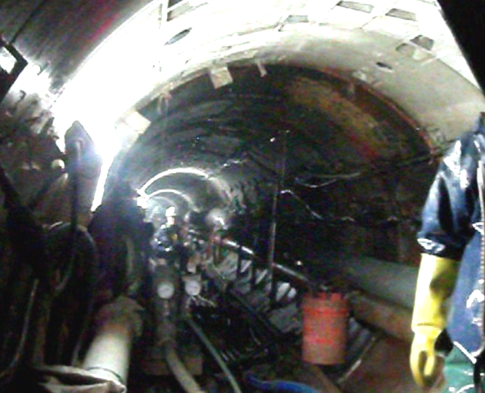
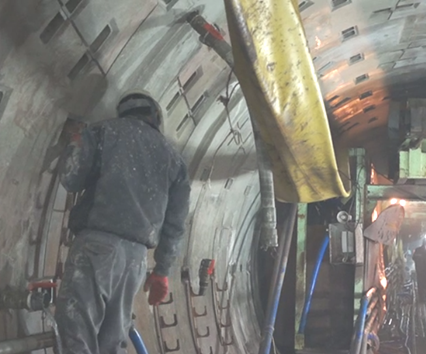
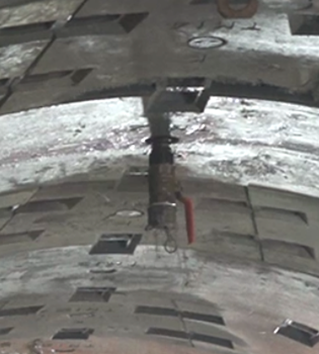
The TG Method (Thixotropic Grout Method) is a grouting technique designed for controlled injection, even under underwater conditions. It features a rapid gel time and maintains a plastic state—having no self-flow but capable of flowing under low pressure—for several minutes before hardening. This behavior enables complete void filling without segregation or gaps, ensuring reliable and uniform backfilling. As a result, the TG Method offers easy application, cost efficiency, and environmentally friendly performance.
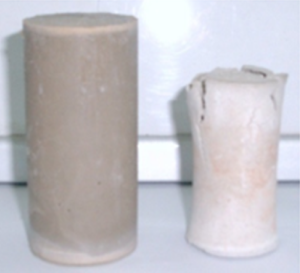
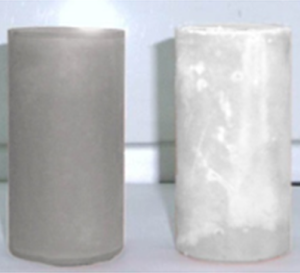
Demonstrates no shrinkage or leaching compared to the LW method.
Performance Comparison: LW Method vs. TG Method
| Category | LW | TG | Features |
|---|---|---|---|
| Gel Time | 20~30 sec | 3~6 sec |
ㆍTG: Rapid gelling minimizes dilution and washout caused by groundwater. |
| Plastic State Duration | About 10 sec | Over 20 min |
ㆍLW: Hardens quickly after gelling, reducing flowability and making complete filling difficult. ㆍTG: Maintains flowability for over 15 minutes, enabling complete void filling. |
-
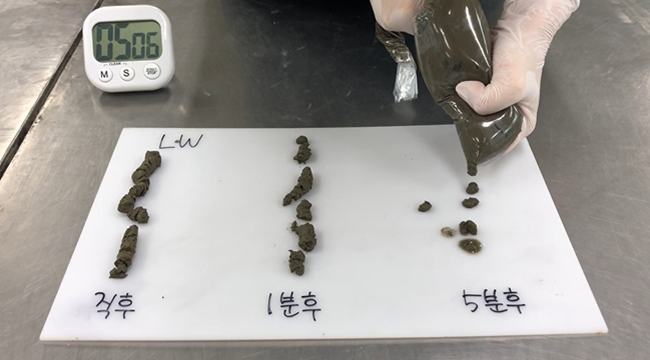
LW Method
• Gel time: 25 sec • Cracks in about 20 sec under pressure -
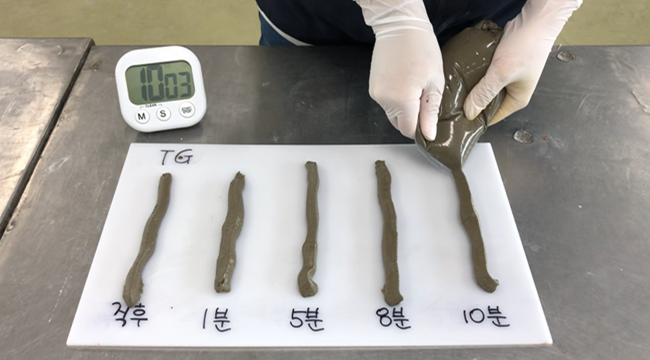
TG Method
• Gel time: 4 sec • Cracks in about 20 min under pressure • Secure sufficient filling time
Material Comparison: LW Method vs. TG Method
| LW | TG | ||
|---|---|---|---|
|
Main Material |
Material Qty’ |
Portland Cement 350 kg |
TG-Cement 300~360 kg |
|
Key Difference |
• Longer gel time • Relatively lower long-term strength |
• Superior long-term strength and water resistance • Maintains plastic state, and the combination of plasticizer and gelling accelerator enables rapid setting without washout |
|
|
Anti- Segregation Agent |
Material Qty’ |
Bentonite 52.5 k |
TG-Bentonite 20 kg |
|
Key Difference |
• Prevent cement particle settlement, • However, due to low swelling capacity, requires high dosage, which may reduce strength |
• High-swelling bentonite combined with polymer improves water resistance and anti-segregation performance |
|
| Retarder |
MAX Stabilizer |
Prevents material separation and premature hardening during long-distance pumping of A-liquid cement slurry through pipelines from the backfill plant. |
|
|
Hardening Agent |
Material Qty’ |
Sodium silicate 112 kg |
TG-Silicate 95~110 kg |
|
Key Difference |
• Provides good initial strength, • However, it contributes to alkali leaching |
• Alkali content is minimized to reduce leaching; • Offers improved stability during winter conditions and better flowability |
|
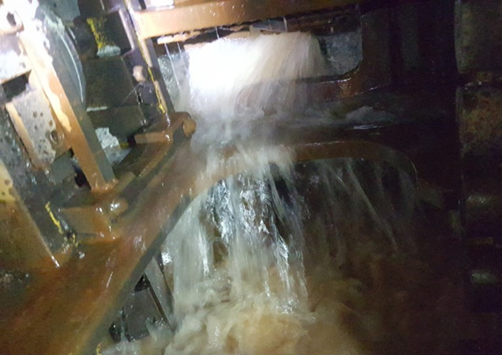
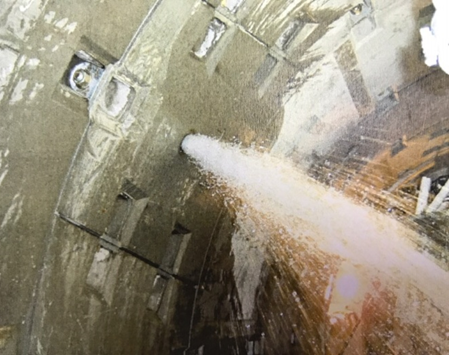
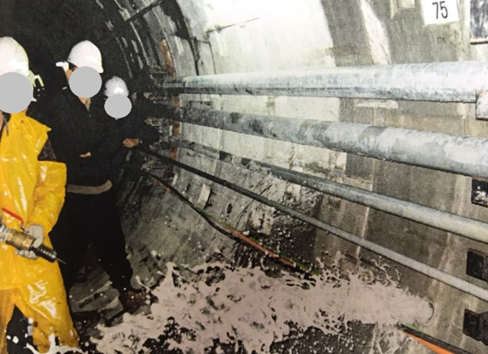
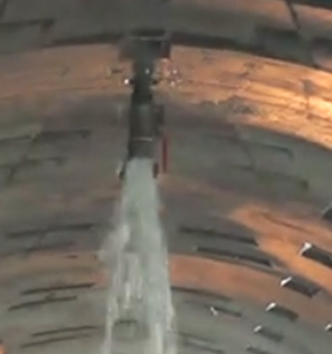
Before TG Grouting - Severe Water Ingress
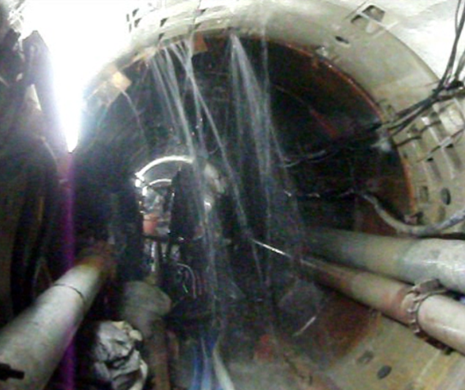
After TG Grouting - Controlled and Stabilized Conditions